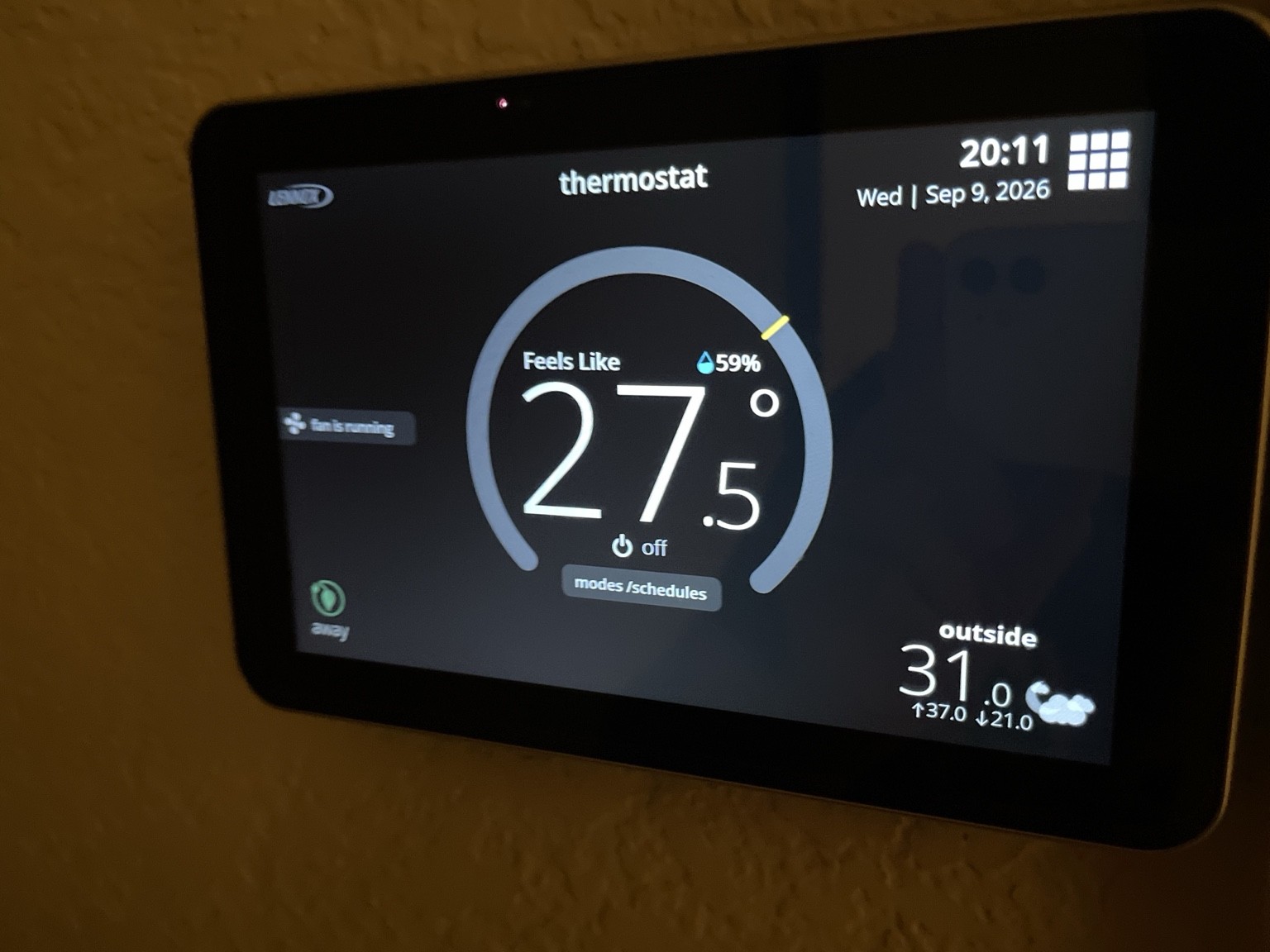
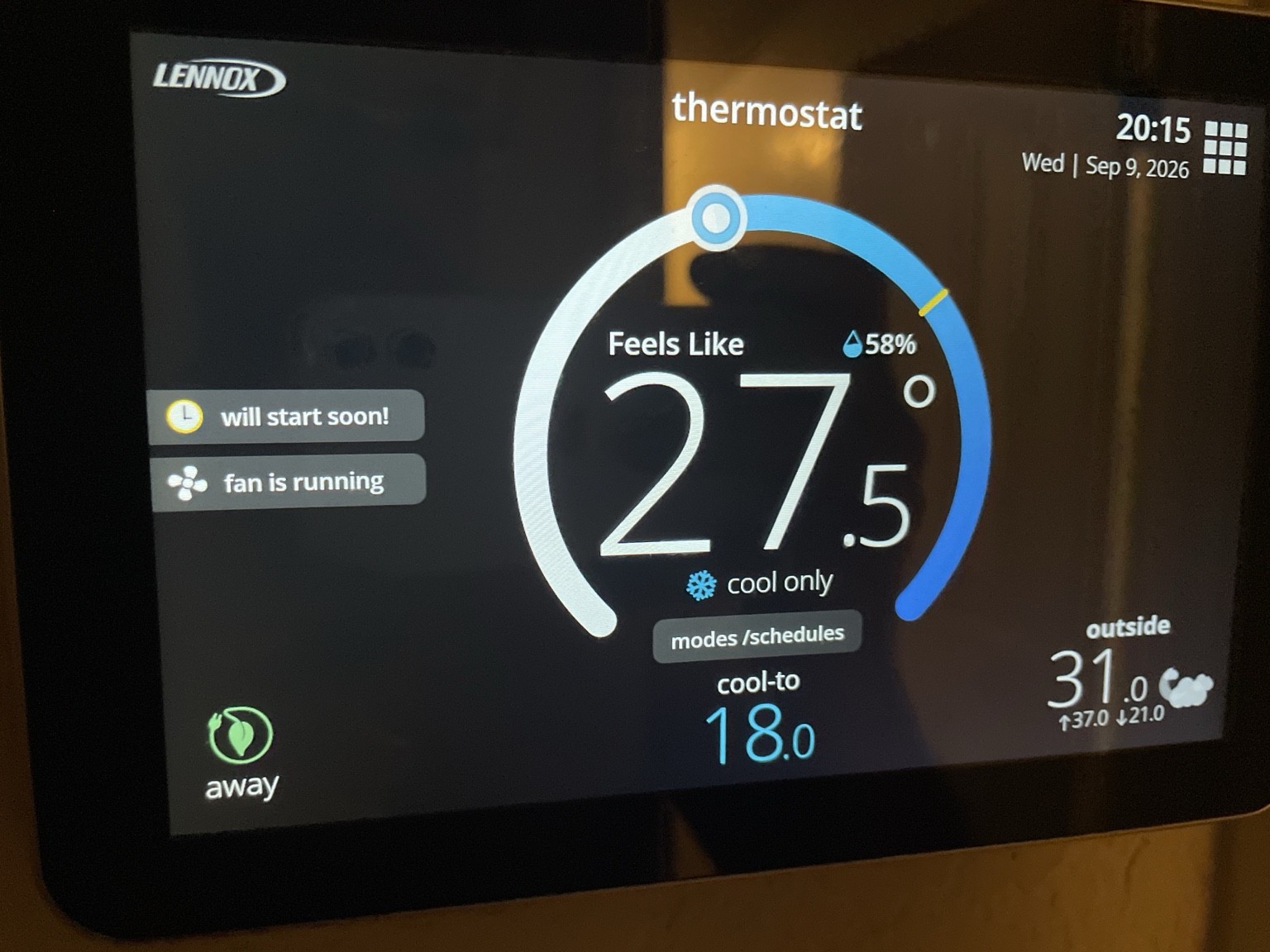
It was hot, and the house was getting hotter. The thermostat said cooling, the target was set to 18°C, and the outdoor AC was doing absolutely nothing.
The indoor temperature started around 27°C and eventually climbed to about 30°C, or 86°F. I wanted cold air, but I also wanted to understand what had failed before assuming the whole system was dead.
Deep down I knew these AC are simple equipment and needed to at least give this a shot before calling the landlord.
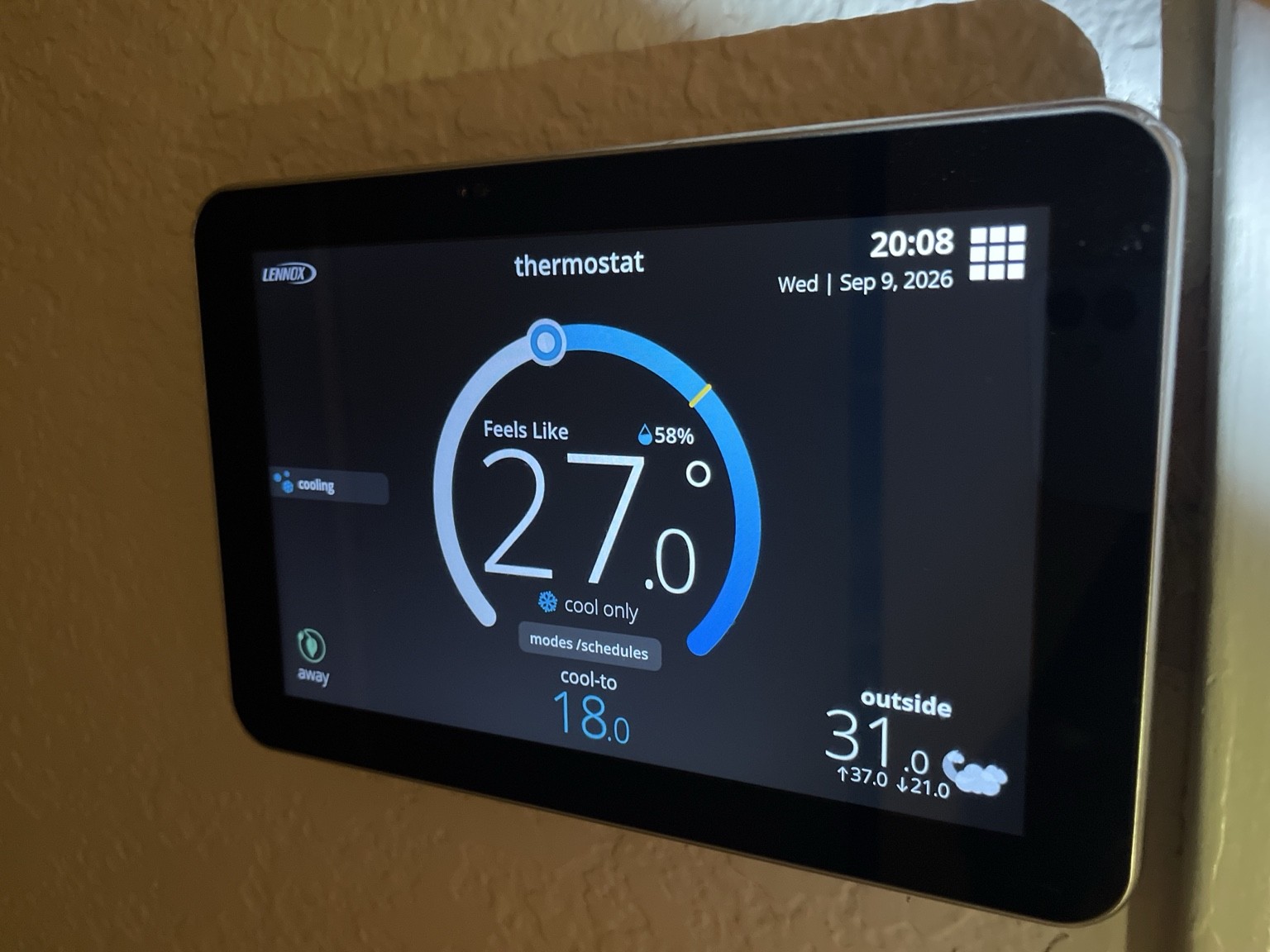
The screen was working. The cooling was not.
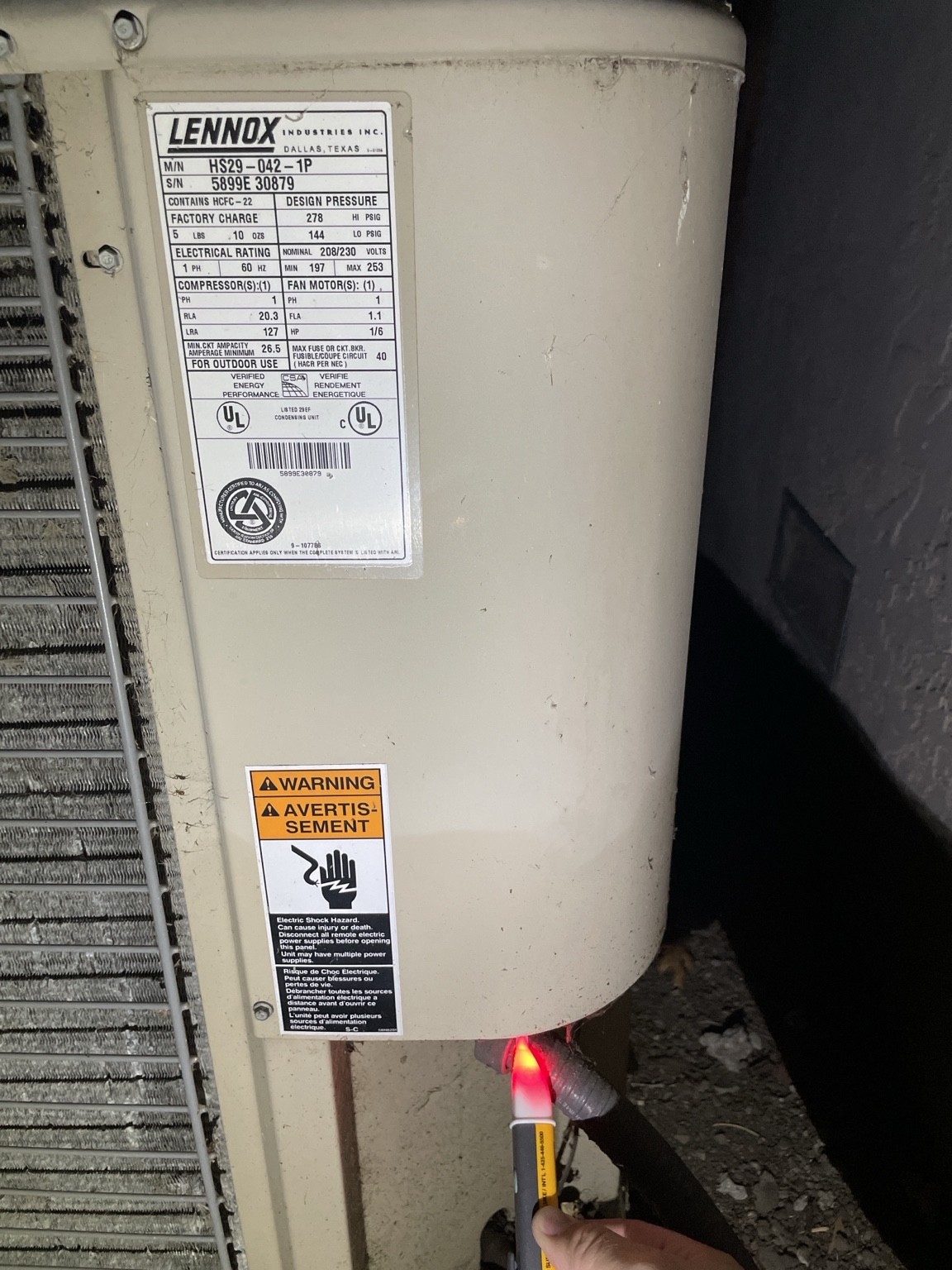
The outdoor unit is a Lennox HS29-042-1P. Its nameplate calls for 208/230 V single-phase power and specifies a maximum 40 A fuse or circuit breaker. My Fluke voltage pen lit up near the incoming cable, which initially made the supply look less suspicious.
Here is the kicker, my fluke did light up but took me a moment to realize that if one fuse if broken, there can still be AC on the other branch! Fluke explains the limits of that kind of test.
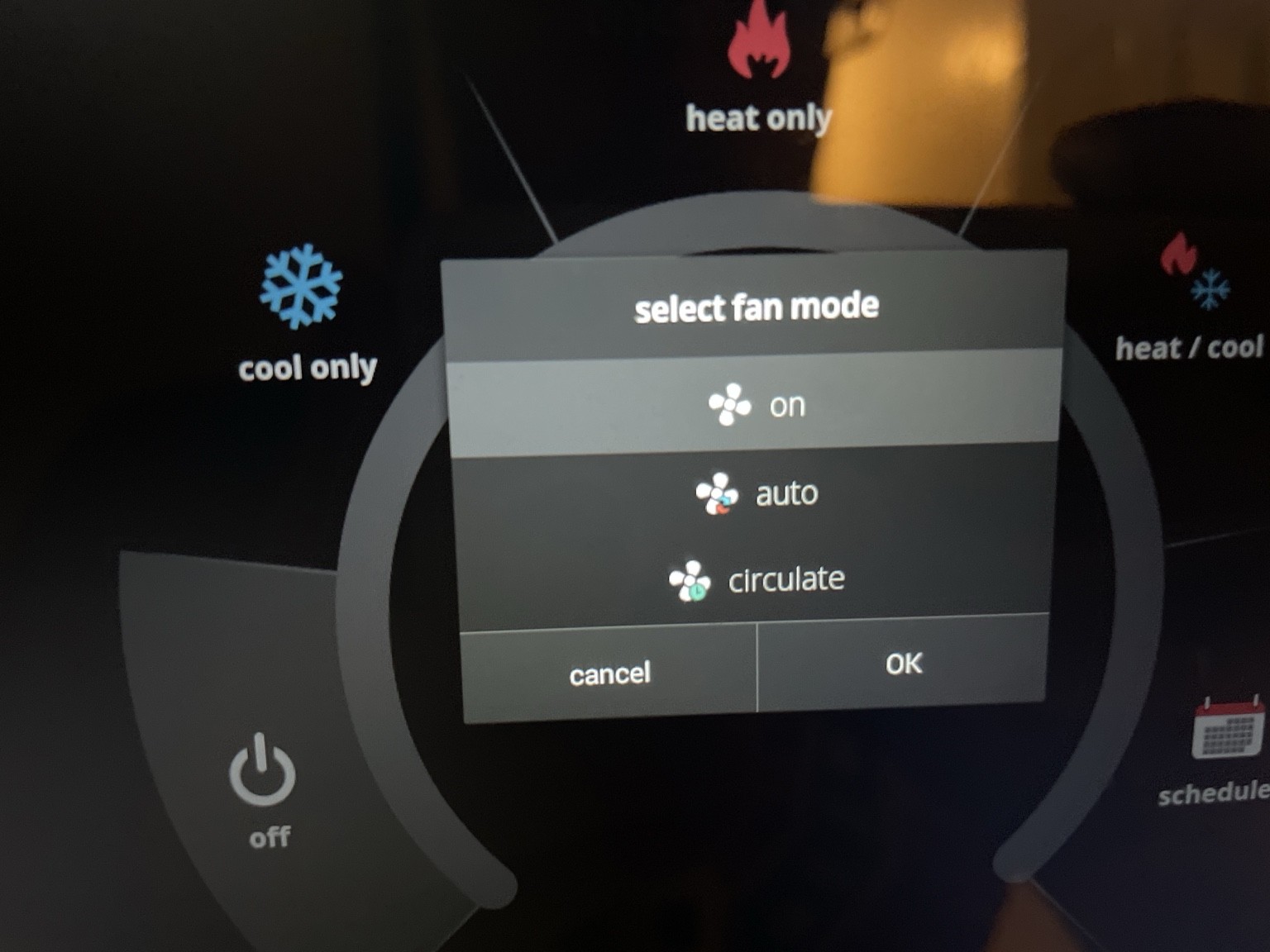
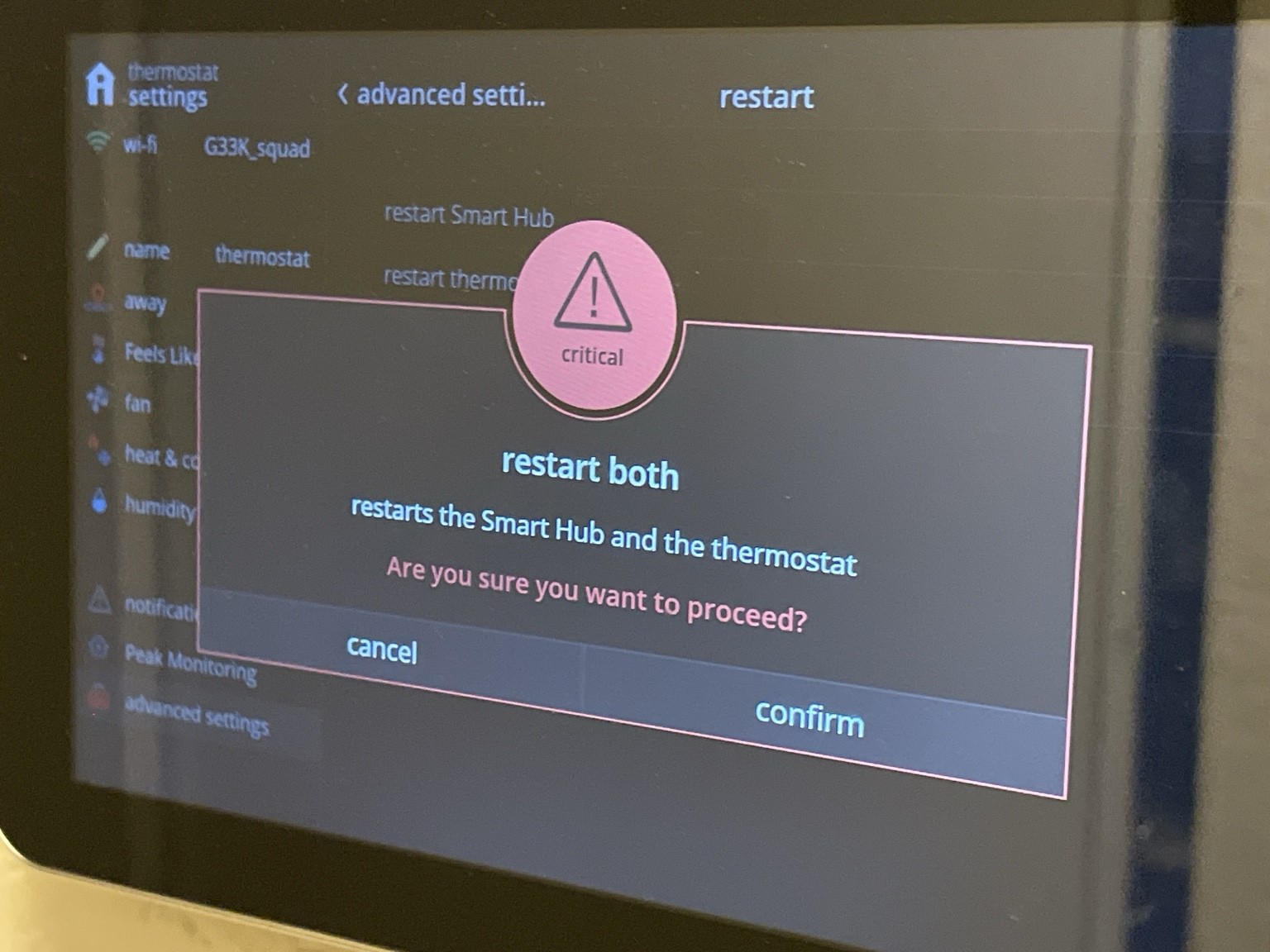
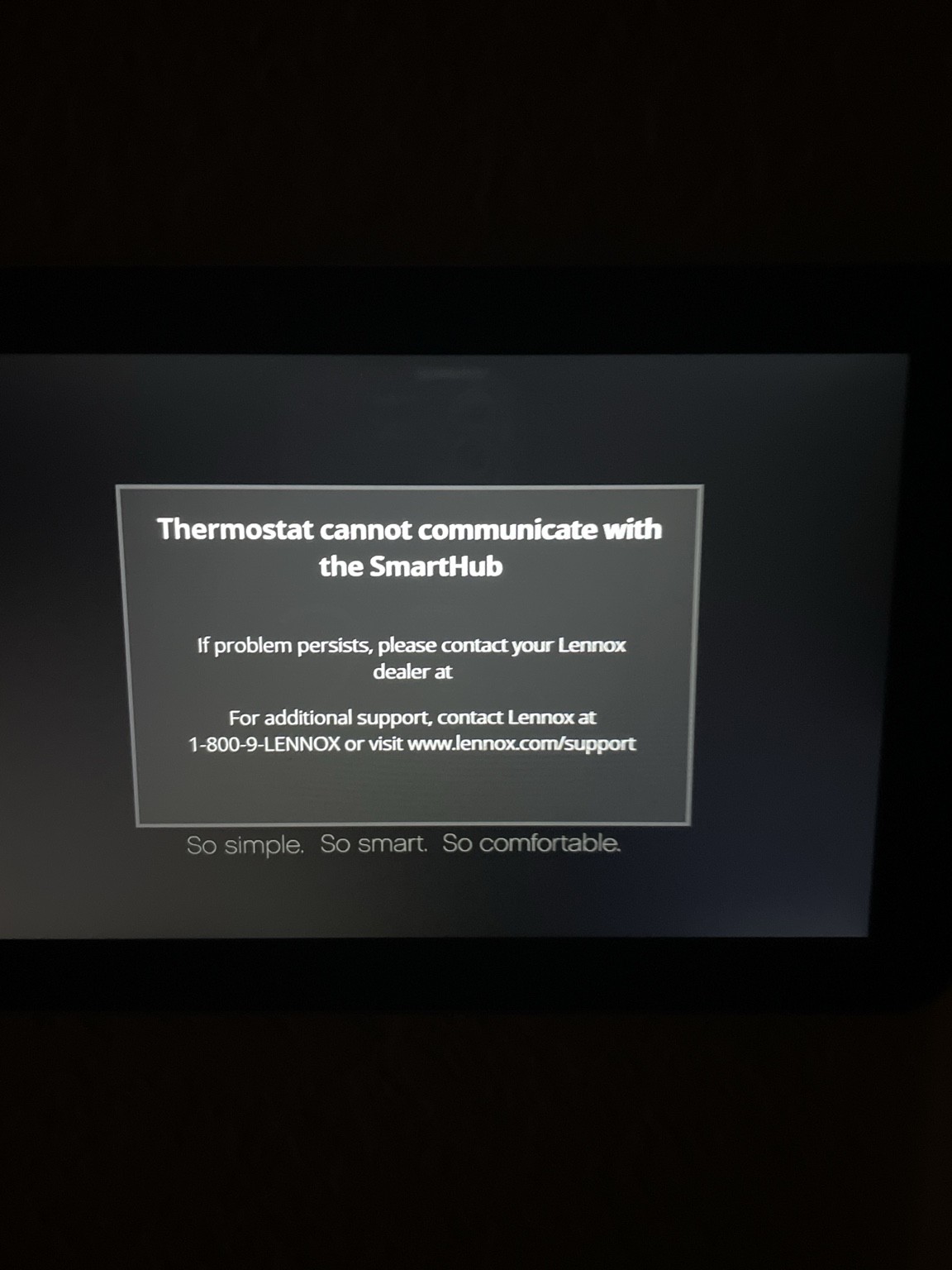
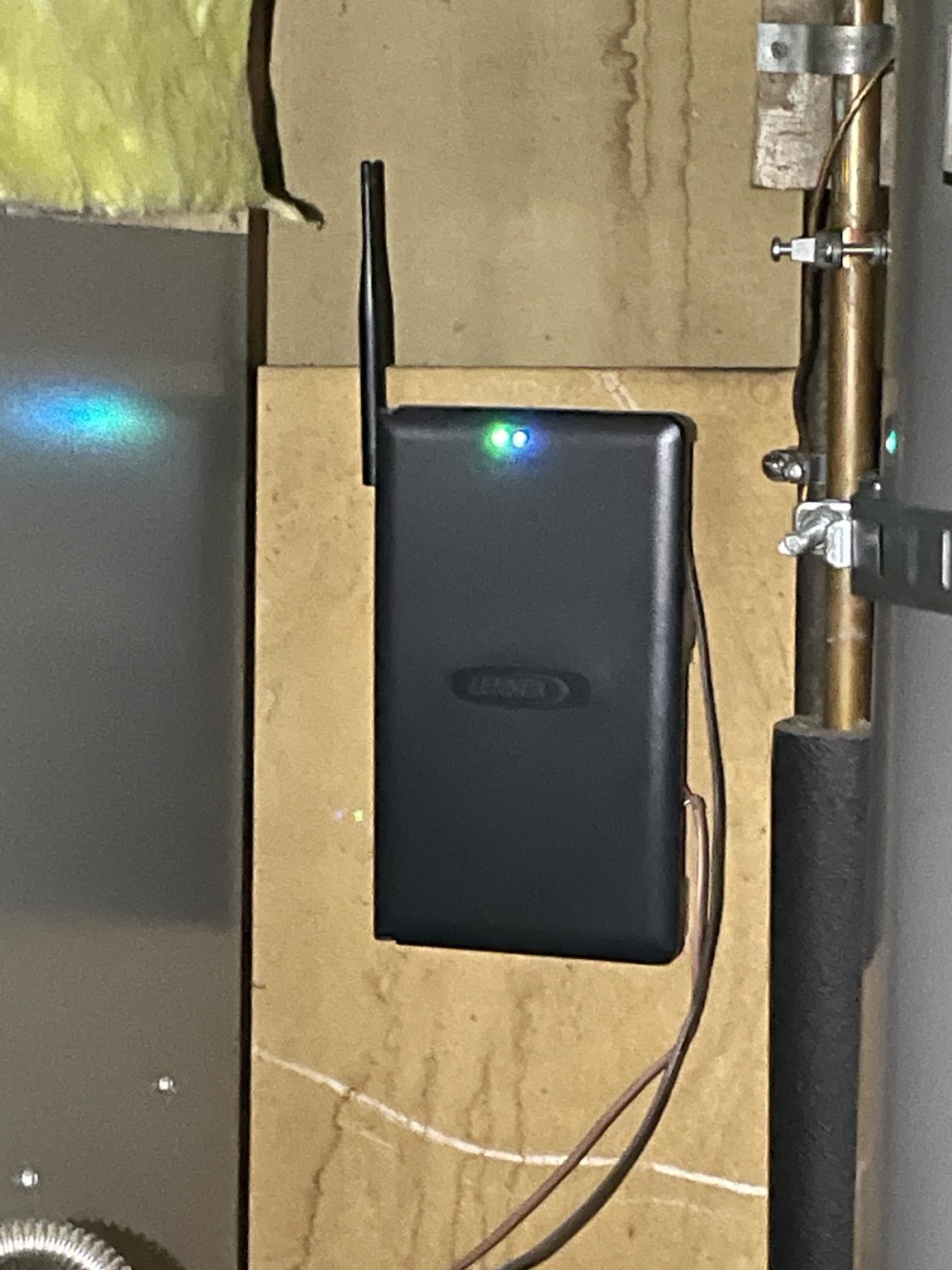
We first checked the thermostat, requested the indoor fan separately, and restarted the thermostat and Smart Hub. HomeKit had also stopped responding. After the restart, HomeKit worked again. The AC still did not cool.
There were a few screen detours: a fan status message, a start-delay message, and a temporary Smart Hub communication message. The lesson was simple: a command on the display is not feedback from a spinning motor. We had to listen and check the vents, not just trust the word cooling.
The breaker panel was not helping.
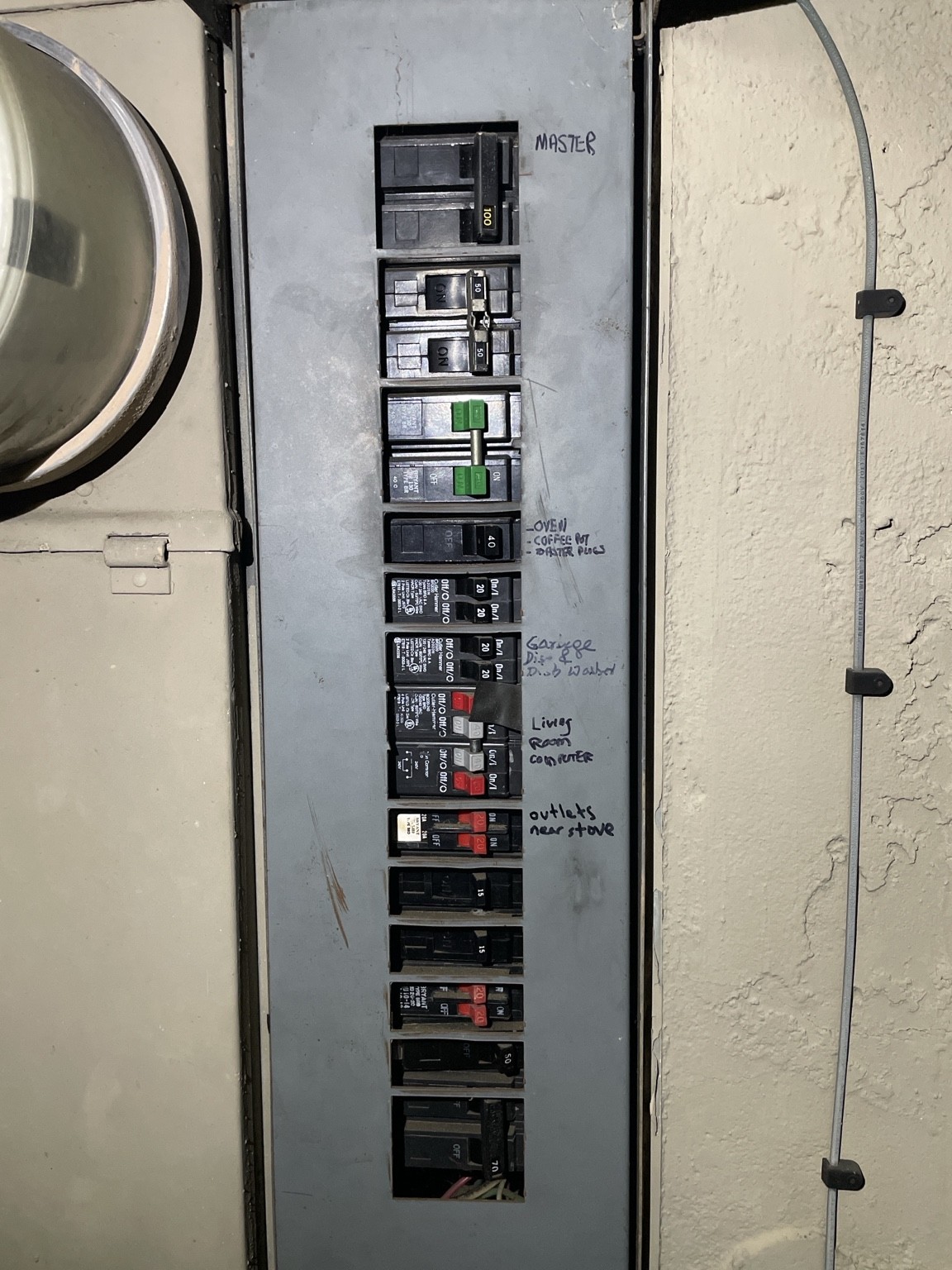
ChatGPT suggested turning off the clearly identified AC or furnace breaker… which I replied that such things do no exist in old house. I then switched off the biggest Amp breakers while checking the same spot with the voltage pen. No matter what breaker I turn off, the Fluke kept lighting up.
One suggestion I genuinely liked from ChatGPT was to leave the breakers I had already switched off in the OFF position while investigating. Nothing essential in the house appeared to have stopped, so why restore those circuits before working out what was going on? It was a simple extra precaution I had not considered.
That is not a substitute for identifying and isolating the actual supply. It just avoids unnecessarily putting power back while the diagnosis is still in progress.
One fuse really was open.
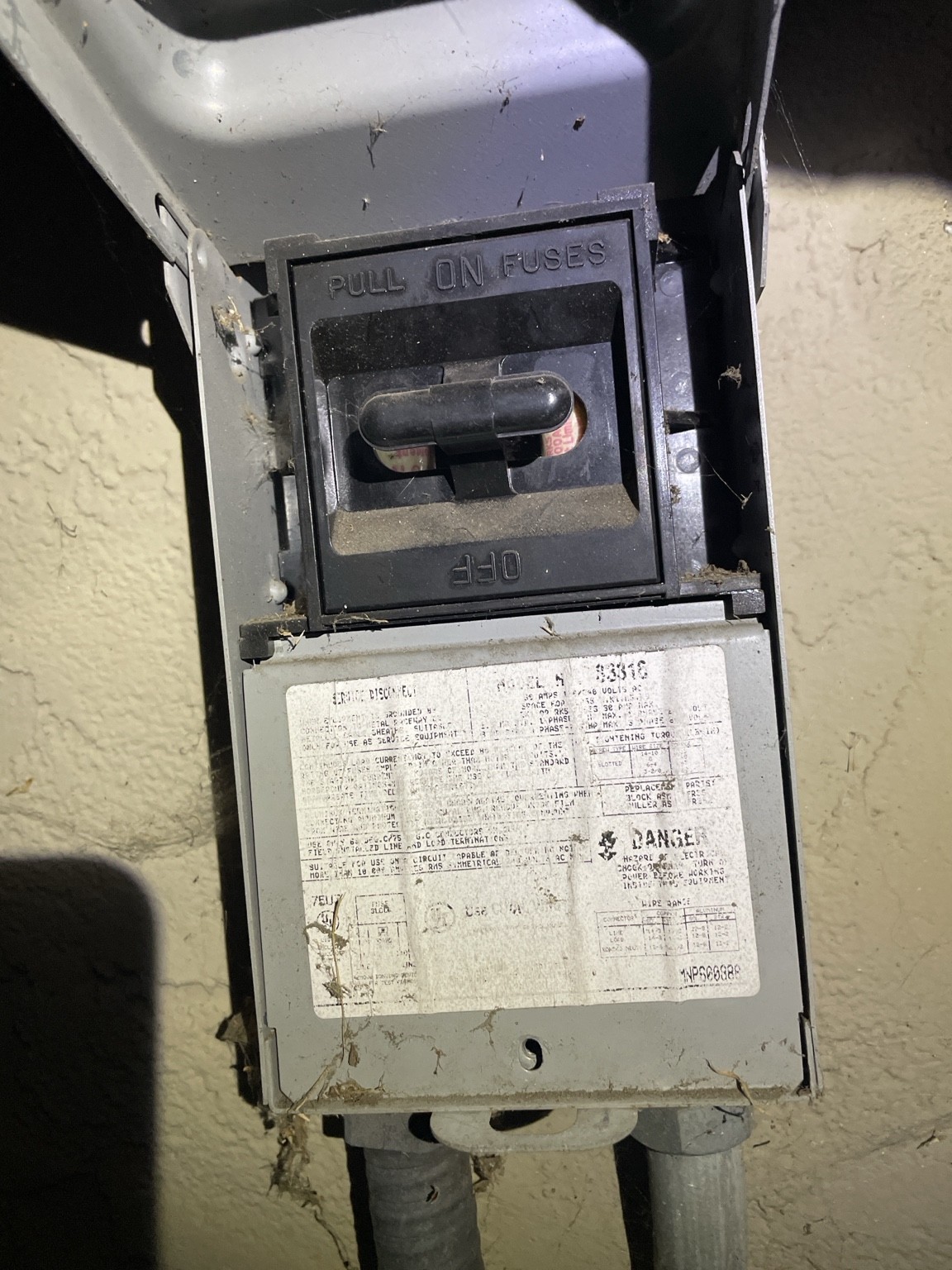
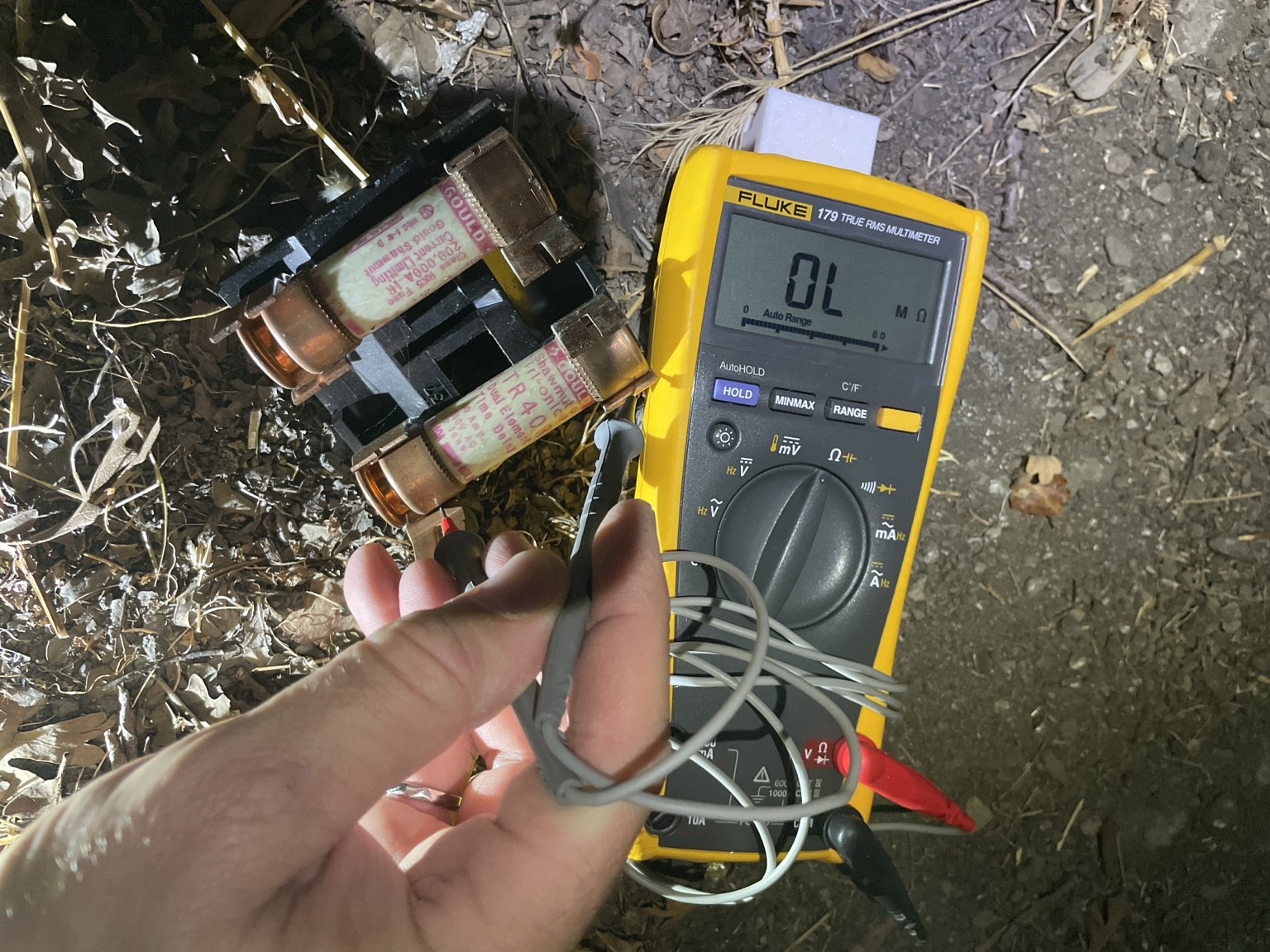
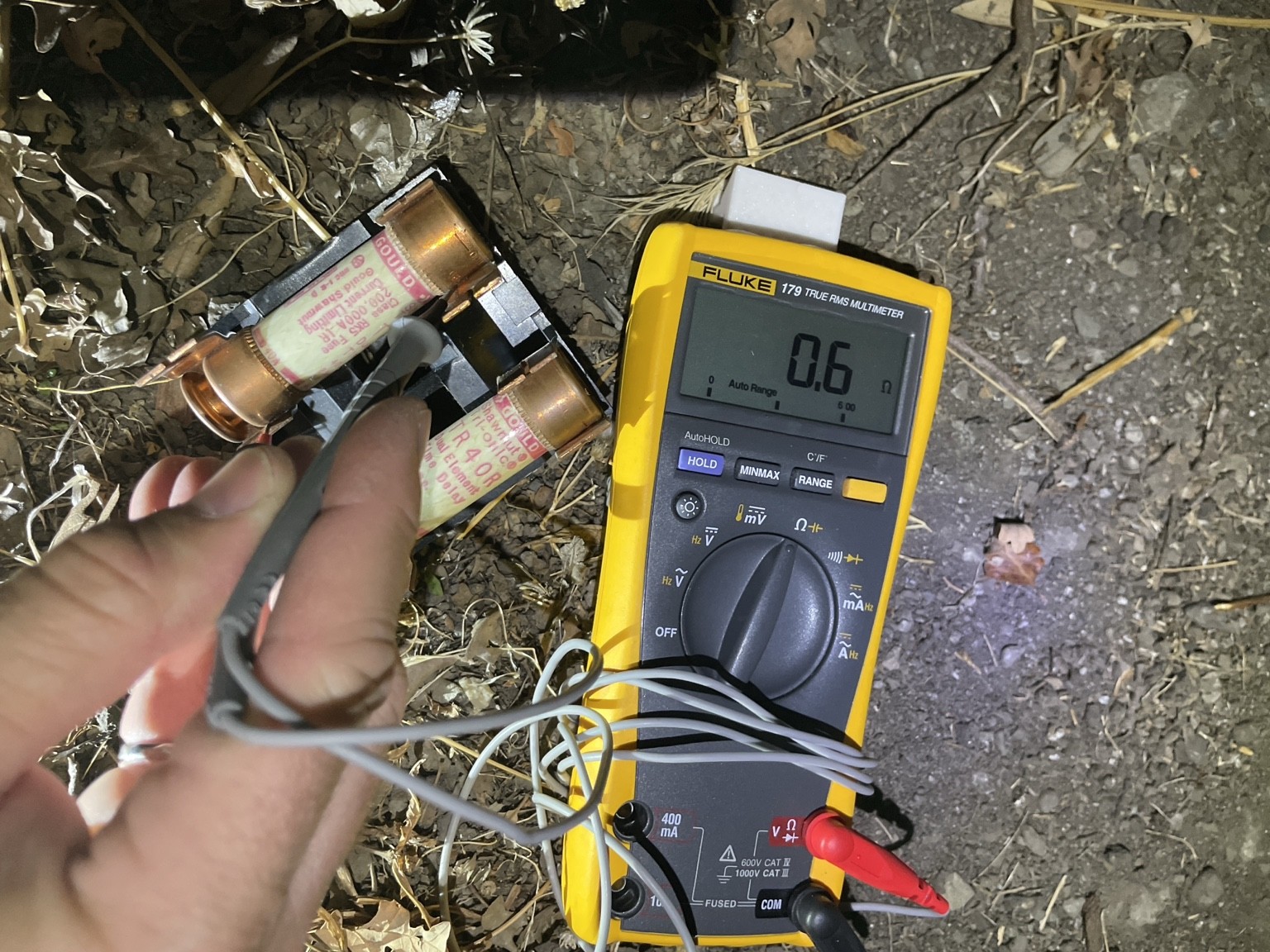
The outdoor disconnect had a removable carrier containing two cartridge fuses. With the carrier completely removed and away from the box, I checked them with my Fluke 179.
One read OL. The other read 0.6 Ω. That second number includes the meter leads and any contact resistance, not just the fuse element. But the open reading gave us something concrete to investigate instead of another thermostat theory.
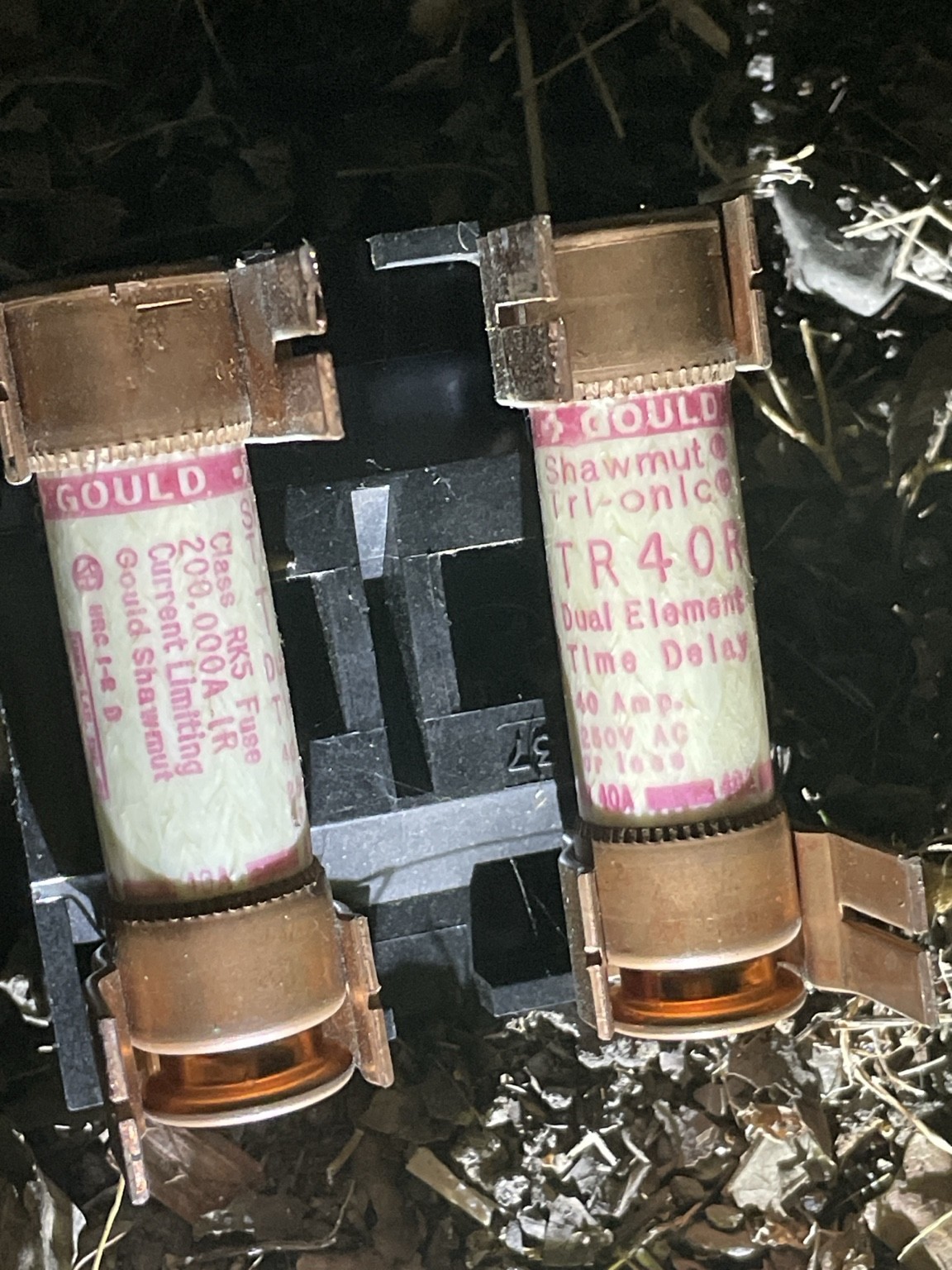
The originals were Gould Shawmut Tri-Onic TR40R fuses: 40 A, 250 VAC, Class RK5, time-delay. ChatGPT found the Bussmann FRN-R-40 as a compatible electrical and physical replacement option, sold in a two-pack as BP/FRN-R-40.
This is also where the conversation became more useful than just a technical explanation. ChatGPT looked up the Home Depot near me, the fuse listing, and the posted 10 p.m. closing time for the day we were looking. It could not verify shelf stock, but having a part number and a store to check was a practical next step.
I went to Home Depot, got the replacement, and changed the blown fuse. The unit now tried to start. Unfortunately, that was not the same as working.
The barbecue stick was a clue, not a repair.
The outdoor fan was struggling to start. I gave the blade a push with a barbecue stick, and it took off.
For a moment I thought, okay, now we can cool the house. But more than 30 minutes later, it was still hot. The indoor blower was audible, the airflow felt weak, and the air was not cold. I checked the filters too.
There are two separate motors outdoors: the condenser fan and the compressor. There is also the indoor blower. I could see the outdoor fan spinning, but I could not confidently establish that the compressor was doing its job. That distinction is where the wiring diagram finally made everything click.
Where is the electronics?
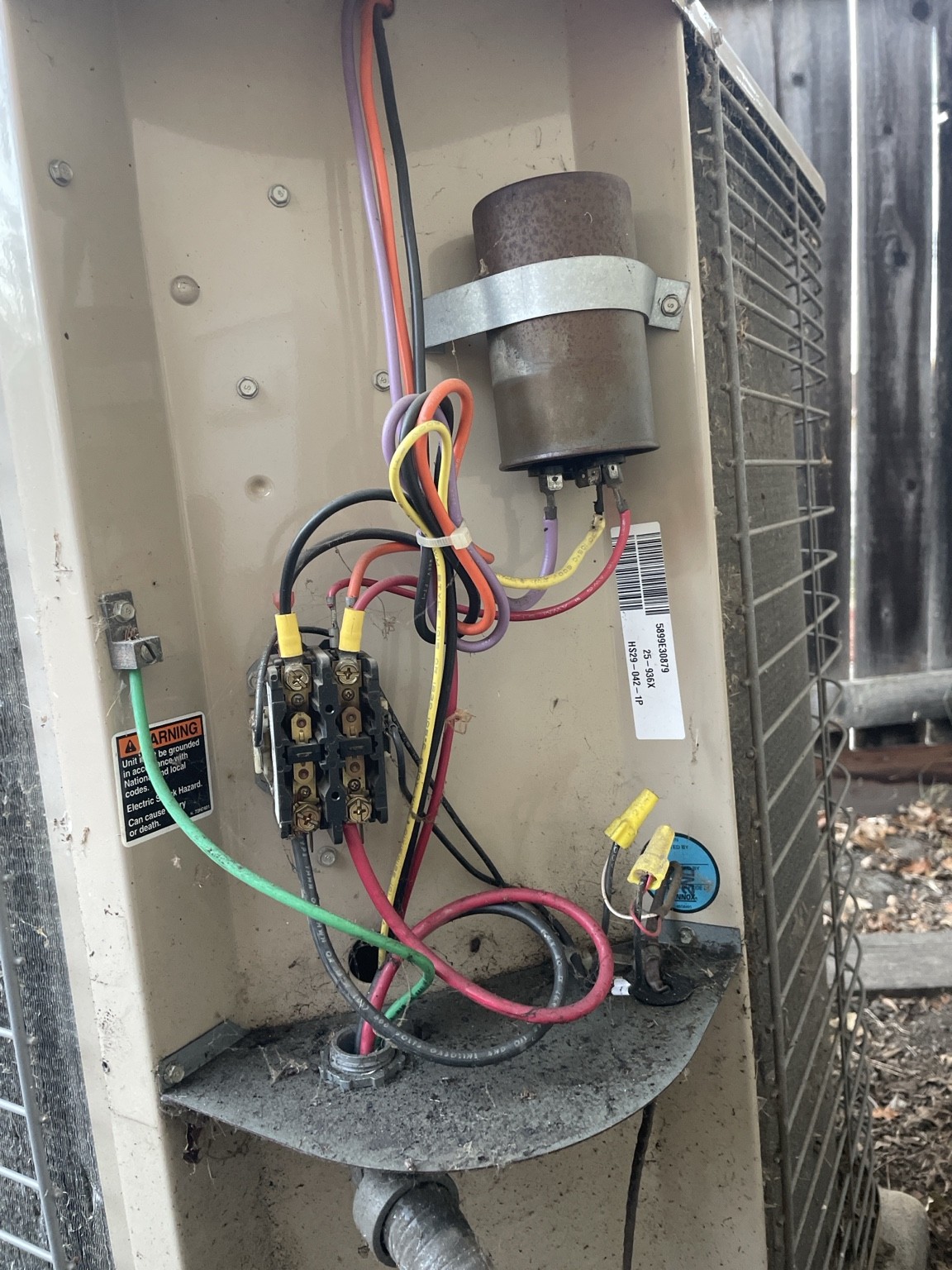
I expected more of a control board. Behind the curved service cover, this unit was mostly wiring, a contactor, and a metal-can capacitor. ChatGPT found the Lennox service manual, including the control-box illustration on page 6 and the operating sequence on page 18. Seeing the documented layout before opening the panel was much more useful than guessing which screws to remove.
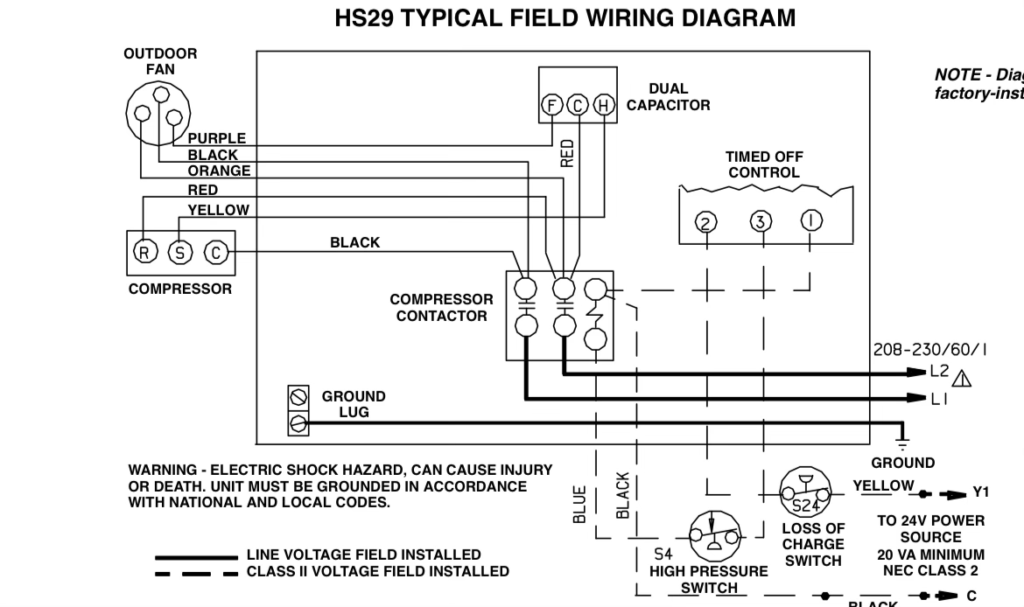
The operating sequence is straightforward: a 24 VAC control signal from the indoor equipment energizes the contactor, which applies mains power to the fan and compressor circuits together. The capacitor does not first start the fan and then send electricity to the compressor. The two motor circuits are separate. Lennox operating sequence.
I actually heard the contactor buzzing while the outdoor fuse carrier was removed. There was still about 24 V at its coil. Turning cooling off indoors stopped the hum and removed the command. That was a useful reminder: removing the outdoor power feed does not necessarily remove the indoor-supplied control voltage. Nor does a quiet contactor prove that the capacitor is discharged.
The so-called starting capacitor is more accurately a dual-run capacitor. It contains two capacitor sections sharing one common terminal. They remain part of their respective motor circuits while running. Lennox component description.
| Connection | Section in the replacement | Job |
|---|---|---|
| C to FAN | 5 µF | Condenser-fan auxiliary winding |
| C to HERM | 40 µF | Compressor auxiliary winding |
On the diagram, the purple lead goes to FAN, the yellow lead to the compressor-side HERM terminal, and red to capacitor common. C means capacitor common, not ground. The small contact symbols in the contactor are switches, not more capacitors. Wiring reference.
That fit my working theory: I had helped the fan rotate, but no one was giving the sealed compressor a push. A bad compressor-side capacitor section could explain the lack of cooling. It was still a hypothesis, not a measurement of the compressor or either capacitor section.
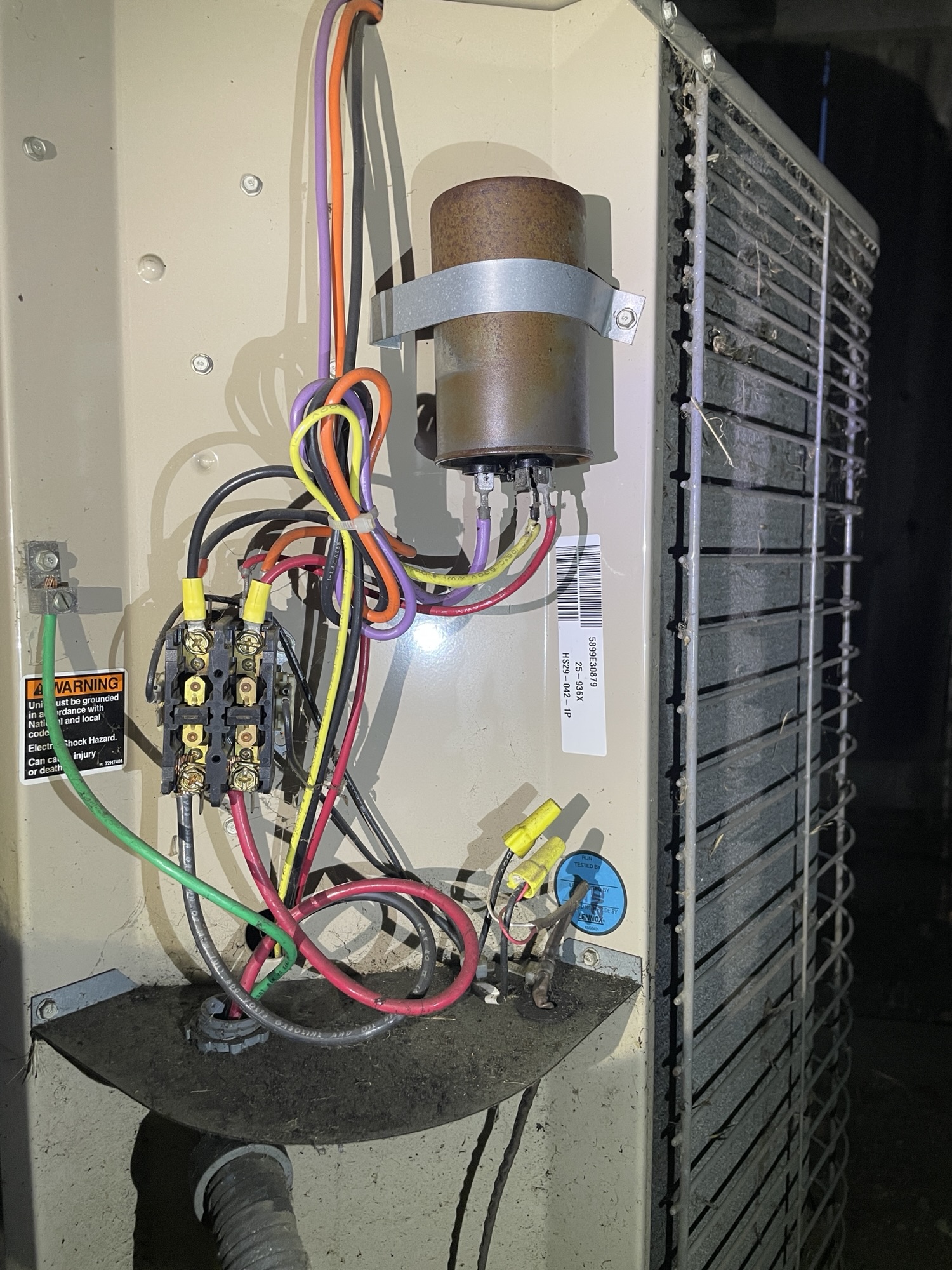
Then I got a close look at the capacitor.
I did everything to a point where I was not really comfortable opening the panel. It’s a double edge sword. If I open and break something, then it’s my fault. Technically this is the landlord problem plus we are messing with electricity. I did call the landlord and he suggest I get few quotes for repair. He warn me that previous tenant got the AC quoted to fix/repair/replace for $10,000! Funny enough, he thought AC was broken all along!
Anyway, the next day I notice that the panel is attach with 2 screws and did open it. To my surprise there is nothing in it!
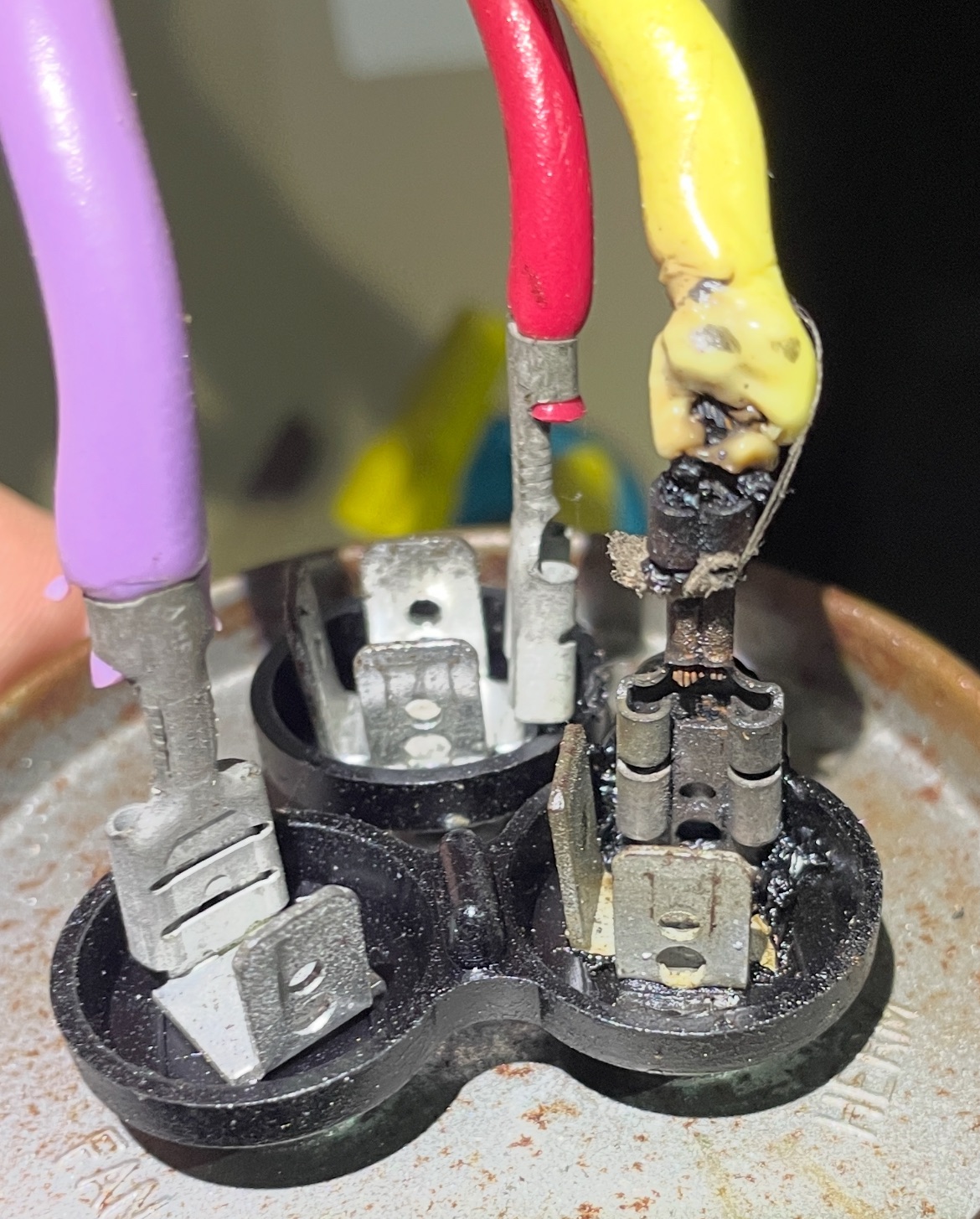
The old can was rusty, but the more interesting detail was underneath. The yellow-wire connection was badly degraded: darkened metal, damaged-looking insulation, and what appeared to be heat damage around the connection.
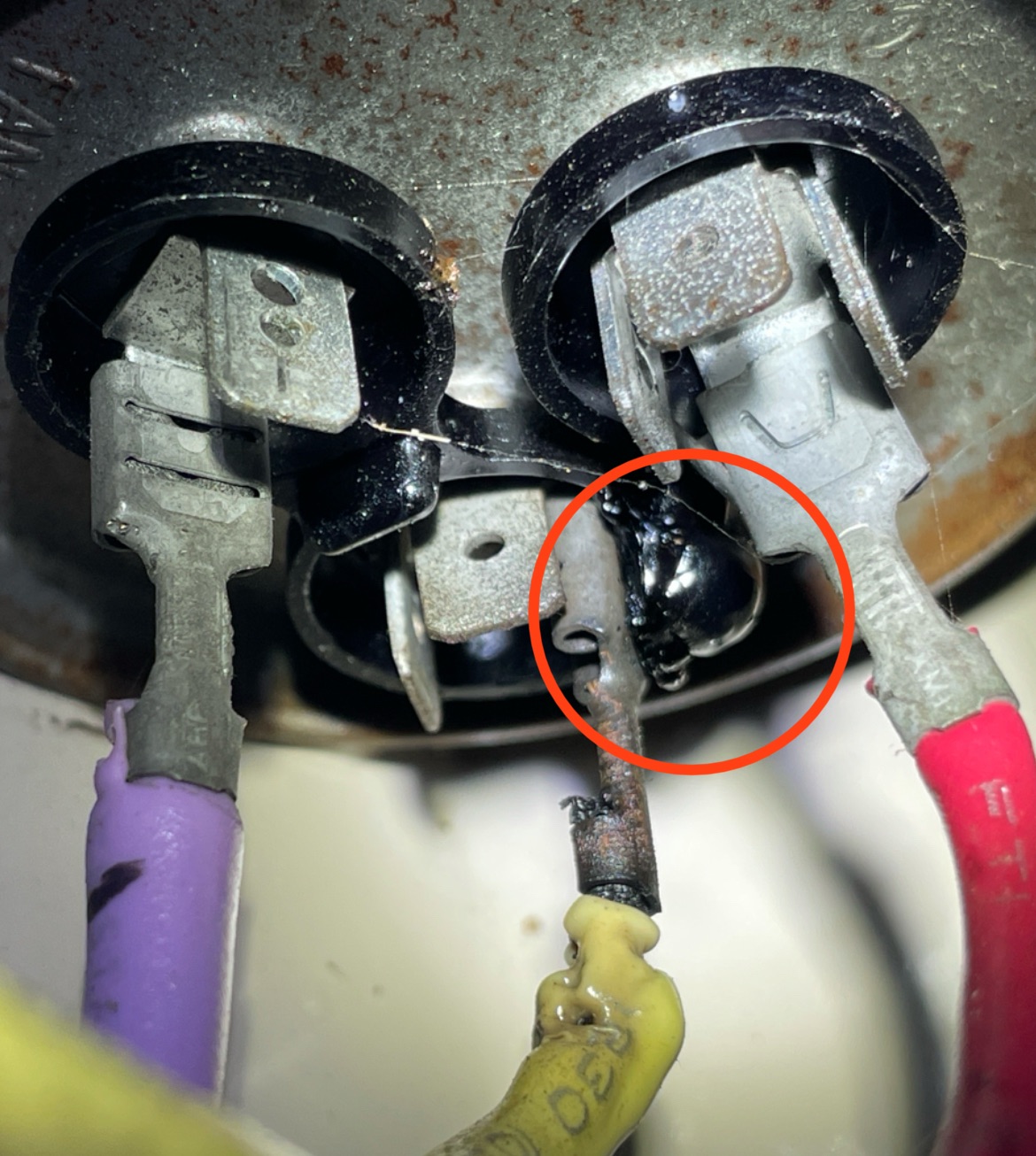
That made the capacitor and its connection much stronger suspects. It did not prove which internal section had failed, or whether a bad connection had caused the heating.
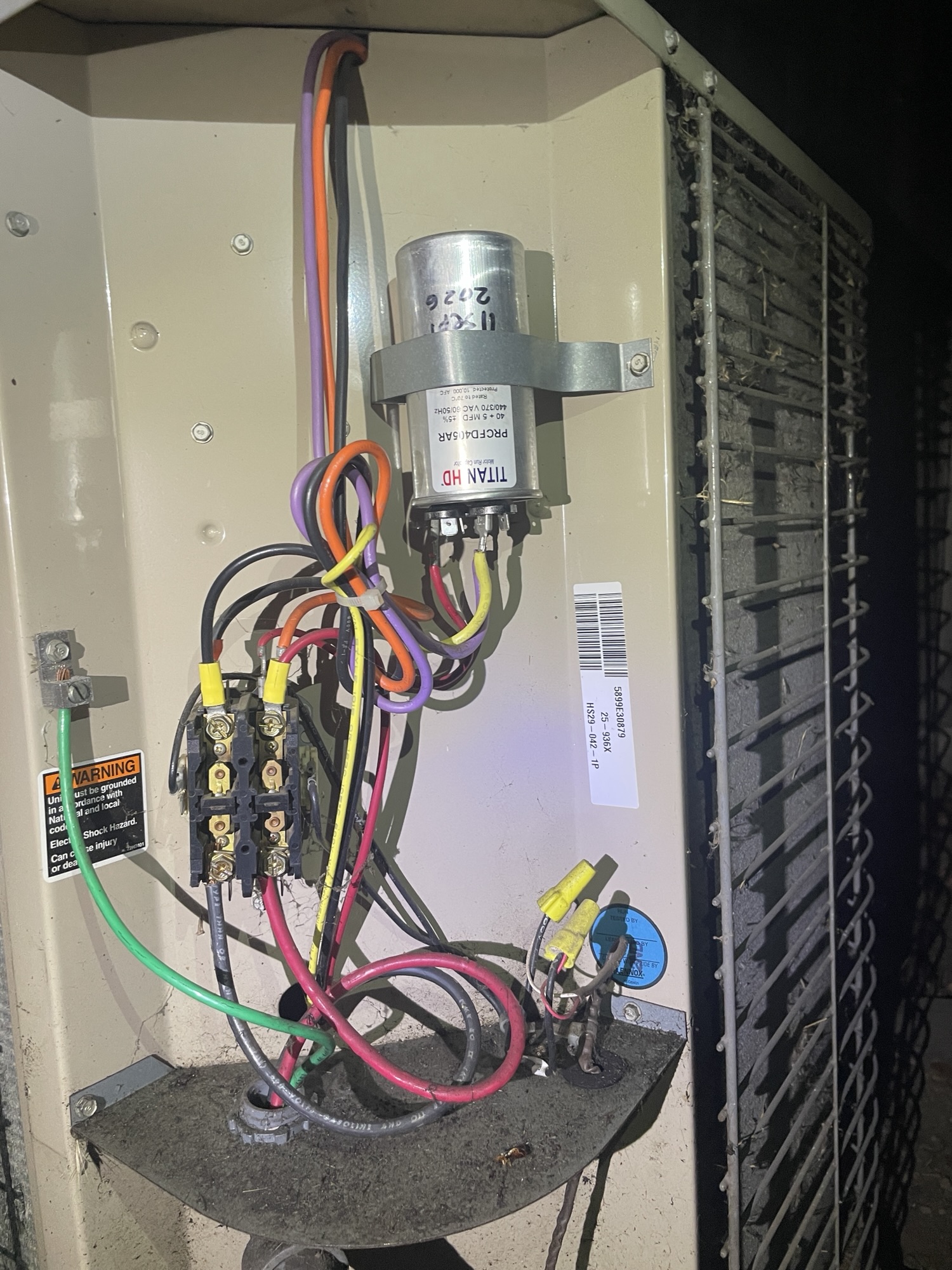
ChatGPT helped identify the replacement specification and again, the link to my local home depot saying it was in stock! The part I bought was a TITAN HD PRCFD405AR. The label in my photo reads 40 + 5 MFD, ±5%, 440/370 VAC, 60/50 Hz. MFD here means microfarads. Manufacturer product family.
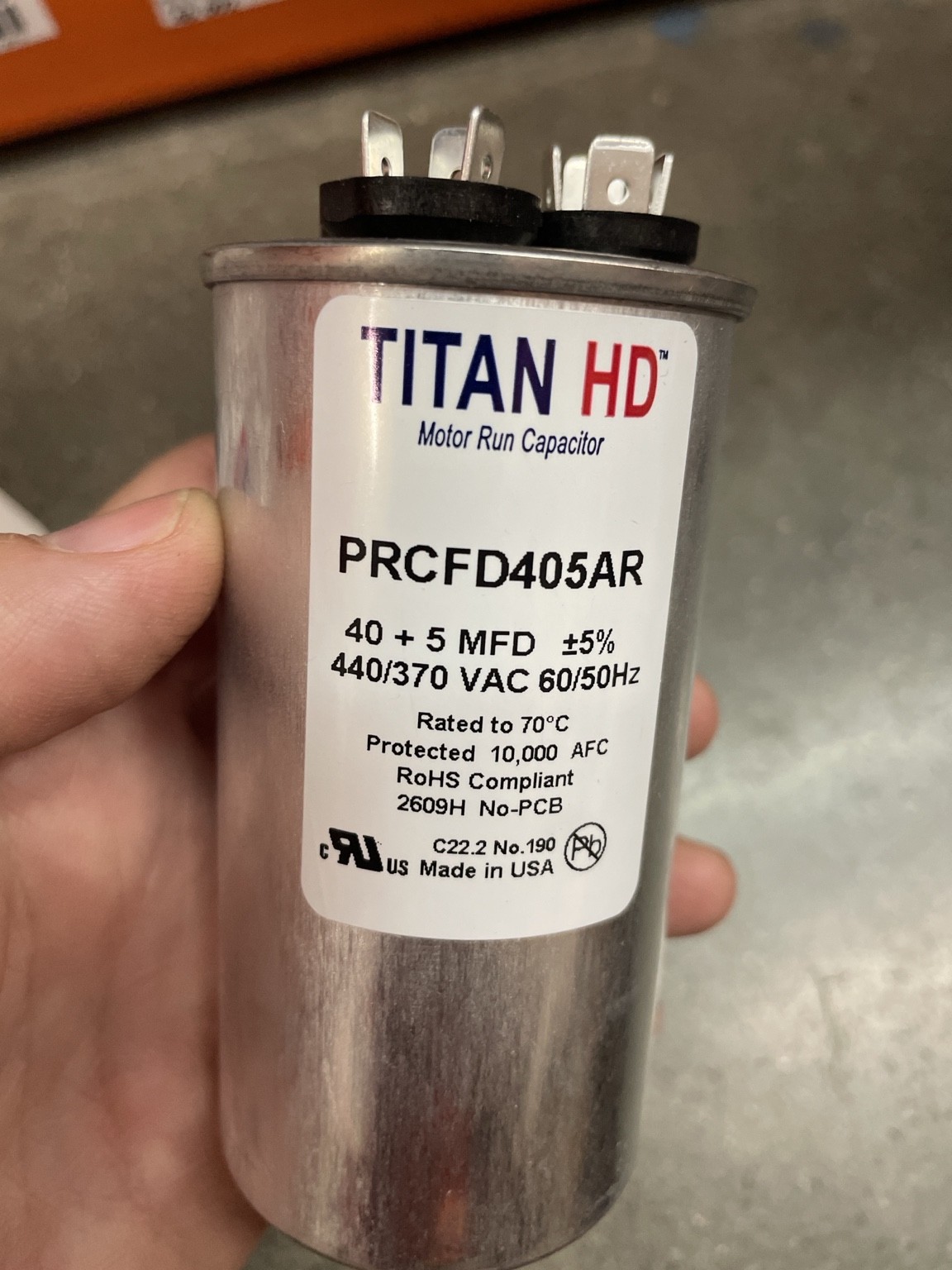
The important wiring detail is to follow the C, FAN, and HERM markings, not copy the old can’s left-to-right arrangement. I replace the wire crimp and up we go.
After I replaced the dual-run capacitor, the AC worked again. That was the result I wanted. Here are before and after pictures.
What I liked about doing this with ChatGPT
It was not one magic answer. It was the back-and-forth: here is the unit, here is the label, here is the meter reading, here is the wiring diagram, and here is what changed after the last step.
The useful parts were surprisingly varied. ChatGPT found manuals, helped interpret the two capacitor sections, identified replacement parts, looked up store hours, and helped me write a short message to my landlord with the model number and symptoms. The suggestion to leave the already-switched-off breakers off was small, but it stuck with me.
It was not flawless. I pushed back when the advice did not match what I could safely access, or when a possible cause was being treated too confidently. A photo and an actual meter reading were more useful than repeatedly saying something was probably broken.
I also had to ask where my responsibility stopped. There is a point where I need to set a limit on troubleshooting and repairing someone else’s equipment. Getting the landlord involved was reasonable even though I eventually narrowed it down and replaced the capacitor.
The main lesson was not that every AC problem is a capacitor. It was that a blown fuse explains why something stopped, not necessarily why it failed; a spinning fan does not prove refrigeration; and a confident answer still needs evidence.
This time, the repair ended with a new metal can and cold air again. The barbecue stick did not make the permanent parts list.
Parts and references from this repair
| Item | Identification |
|---|---|
| Outdoor unit | Lennox HS29-042-1P |
| Original disconnect fuse | Gould Shawmut TR40R; 40 A, 250 VAC, Class RK5, time-delay |
| Compatible fuse option found | Bussmann FRN-R-40 / retail pack BP/FRN-R-40 |
| Capacitor purchased | TITAN HD PRCFD405AR; 40 + 5 µF, ±5%, 440/370 VAC |
| Meter | Fluke 179 |
This write-up was developed from my troubleshooting conversation with ChatGPT.